
Legal Clinic ‘Social Justice’
Institution:
Universidade da CoruñaCountry:
SpainDiscipline:
LawLevel:
BADuration & intensity:
Semester-course, 100 hours of field placementNumber of students:
15Societal need addressed
Unmet legal and social needs of vulnerable populations, including:
- Migrants and refugees
- Prison inmates
- Individuals experiencing poverty and housing insecurity
- People with disabilities
- Families facing complex legal and social challenges
Key competences for Democratic Culture
- Valuing human dignity and human rights
- Valuing democracy, justice and equality
- Analytical and critical thinking skills
About the course
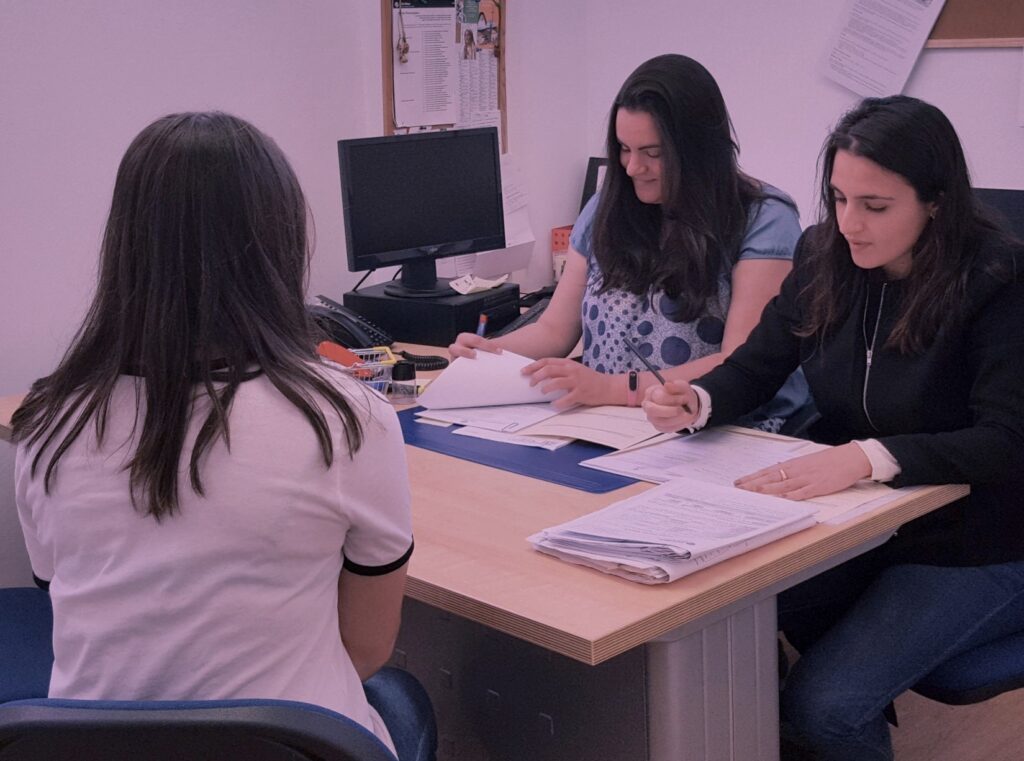
The Legal Clinic Xustiza Social is an initiative that combines legal education with social commitment, placing the university at the service of the community. Established in 2017–2018, the Clinic is based on a clinical and service-learning approach through which law students apply their academic knowledge to real-life legal and social challenges, while contributing to the protection of rights and the empowerment of people and communities in vulnerable situations. The Clinic provides a space where teaching, professional training and social engagement converge. Students participate in projects developed in collaboration with social organisations, public institutions and other community partners, working under the supervision of academic staff and professionals. The partners are, among others, a prison, a charity, a NGO or the social services of the city council.
As part of the UDC’s commitment to community engagement, the Xustiza Social Legal Clinic illustrates how universities can move beyond traditional knowledge transmission and become active partners in addressing social challenges and generating meaningful community impact. Its social impact extends beyond the educational experience of students. The Clinic contributes to bringing legal knowledge closer to society, responding to concrete needs identified by partner organisations and developing activities such as legal information and guidance, preparation of accessible legal materials, awareness-raising initiatives and training aimed at specific groups. Its collaborations have addressed issues affecting people and communities experiencing different forms of social vulnerability.
How are Competences for Democratic Culture developed?
Through the service-learning projects, the students gain practical legal skills while developing a deeper understanding of the social dimension of law, the barriers that may prevent effective access to justice, and the role that legal professionals can play in addressing situations of inequality and exclusion. The Clinic therefore represents a two-way relationship between the university and society: students learn from real social needs, while community partners and beneficiaries gain access to legal knowledge, resources and support. In this way, the Clinic contributes to strengthening access to justice, social inclusion and the effective exercise of rights, while fostering a culture of civic responsibility among future legal professionals.
It has been a profoundly enriching experience, both academically and personally. It has given us the opportunity to apply and expand our knowledge within a real-world environment with a strong social component. Beyond the technical learning, it has provided insight into a complex and, in many cases, unfamiliar reality, allowing us to better understand the situation of incarcerated individuals and reflect on our role as future legal professionals. We believe that this experience not only benefits those of us undertaking the internships, but also the inmates themselves, who receive attention, a listening ear, and guidance during a particularly sensitive time in their lives. For all these reasons, we encourage prospective students to consider this option, as it can be crucial in confirming their vocations and guiding their career decisions.
University-Community Partnership
Community partners involved
- Cáritas
- Consorcio das Mariñas
- Teixeiro Penitentiary Centre
- Fundación Paideia
- Spanish Legal Clinic Network
Co-definition of the social need
Community partners identify pressing legal and social challenges faced by their users. Through ongoing collaboration with academic staff, these needs are translated into service-learning projects. Cases, workshop topics, and legal problems originate directly from community organizations and beneficiaries.
Reciprocity & partner role
Partners act as beneficiary, co-educator and co-designer. Students subsequently work on real cases under joint academic and professional supervision. Community organizations receive legal support, educational materials, workshops, legal analyses, practical solutions, and increased organizational capacity. Students gain authentic professional experience through direct engagement with real clients and social challenges. Partners actively contribute to defining cases, supervising students, and evaluating project outcomes.
Pedagogical design
Curriculum integration
The Legal Clinic “Social Justice” is integrated into the Law Degree through curricular internships (Prácticas Externas Curriculares), extracurricular internships, and Final Degree Projects (TFGs). Students receive academic credits through the internship module and engage in real legal cases serving vulnerable populations. The clinic represents a service-learning approach embedded within the practical training component of legal education.
Learning objectives
The Legal Clinic aims to:
- Develop practical legal competencies through real cases.
- Connect legal theory with professional practice.
- Strengthen ethical responsibility and social justice awareness.
- Foster critical legal thinking and problem-solving.
- Promote civic engagement and professional responsibility.
- Enhance communication, mediation, and client-oriented skills.
- Develop students’ ability to work with vulnerable populations.
Service & learning activities
Service activities:
- Legal counselling and orientation
- Analysis of real legal cases
- Preparation of legal reports and recommendations
- Support in accessing social benefits and public services
- Workshops and seminars for prison inmates
- Development of practical legal guides and informational materials
- Assistance to migrants, refugees, and vulnerable families
- Participation in emergency legal response initiatives.
Learning activities:
- Legal research and case analysis
- Client interviews
- Problem-solving and legal reasoning
- Preparation of legal documentation
- Reflection and critical analysis
- Collaborative work with professionals and community organizations
- Presentation and communication of legal information in accessible formats
Active role of the student
Students play an active role in analysing cases, proposing legal solutions, developing educational materials, preparing workshops, and identifying additional actions that may benefit communities. Several initiatives, such as practical legal guides, originated directly from student ideas and observations of community needs.
Reflection
Reflection is embedded throughout the placement, taking place before, during and after the service activity. Students maintain diaries, participate in meetings with academic supervisors, prepare weekly reports, and complete final reflective reports. Reflection helps students connect legal theory with practice, critically examine social inequalities, evaluate their professional development, and understand the societal implications of legal work.
Assessment
Assessment consists of evaluation of professional performance, initiative, problem-solving, and engagement. Teachers, students and community partners are engaged in the course assessment
Assessment methods:
- Professional supervisor assessment
- Student reflective report and portfolio
Competences for democratic culture
Competences for democratic culture
Values
- Valuing human diginity & human rights
- Valuing democracy, justice, equality & the rule of law
Attitudes
- Respect
- Responsibility
Skills
- Analytical & critical thinking skills
- Autonomous learning skills
- Co-operation skills
- Conflict-resolution skills
- Empathy
- Flexibility & adaptability
- Linguistic, communicative & plurilingual skills
Knowledge and critical understanding
- Knowledge & critical understanding of the world
How are competences for democratic culture developed?
Students engage directly with socially vulnerable individuals and communities, confronting real issues of inequality, poverty, migration, disability, incarceration, and social exclusion. Through legal counselling, collaborative problem-solving, dialogue with clients and professionals, and continuous reflection, students develop democratic values, empathy, social responsibility, and an understanding of justice and human rights in practice.
Outcomes & impact
Learning outcomes for students
- Practical legal competence
- Legal research and analysis skills
- Communication and interviewing skills
- Professional ethics
- Understanding of social justice and vulnerable populations
- Interdisciplinary problem-solving abilities
- Improved capacity to connect legal frameworks with real-life situations
Community impact
- Legal assistance provided to hundreds of beneficiaries
- Improved access to legal information and social benefits
- Legal workshops and counselling for prison inmates
- Development of guides and educational materials
- Strengthened support for migrants, refugees, and vulnerable families
- Enhanced collaboration between university and civil society
Challenges & conditions for success
Challenges
- Limited number of internship places
- Short duration of placements (100 hours)
- Balancing academic requirements and community needs
- Managing complex multidisciplinary cases
- Maintaining sustainability of projects
- Expanding cooperation beyond the Faculty of Law
- Coordinating year-round partnerships and new initiatives
Conditions for success
- Institutional recognition of service-learning
- Reliable community partnerships
- Academic staff committed to experiential learning
- Structured supervision and assessment mechanisms
- Opportunities for students to work on authentic community needs
- Balance between professional responsibility and student autonomy