
Service-learning for the Clear Communication of Legal Concepts
Institution:
Autonomous University of MadridCountry:
SpainDiscipline:
Interdisciplinary, Law, LinguisticsDuration & intensity:
Semester-courseNumber of students:
40Societal need addressed
Promote communicative accessibility, legal literacy and democratic inclusion for people with intellectual disabilities
Key competences for Democratic Culture
- Valuing human dignity and human rights,
- Empathy
- Linguistic, communicative and plurilingual skills
- Knowledge and critical understanding of communication and language
About the course
In 2021, a major reform of Spanish civil law transformed how people with intellectual disabilities exercise their legal capacity. Moving away from substitute decision-making, whereby decisions were made on their behalf by legal guardians, the reform places the will, wishes and preferences of people with intellectual disabilities at the centre and establishes a system of support for the exercise of legal capacity when needed, enabling them to make legally binding decisions and enter into contracts. While this reform represented an important step towards equality, autonomy and social inclusion, it also exposed a significant challenge: legal language remains difficult to understand for many citizens and can be particularly inaccessible for people with intellectual disabilities. As a result, exercising legal rights effectively requires not only formal recognition of those rights but also access to understandable information.
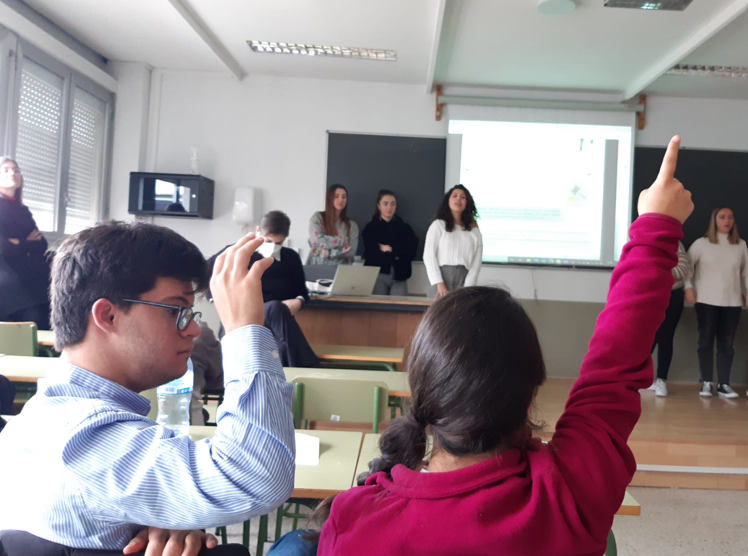
The project Easy-to-Read Contracts was developed at Universidad Autónoma de Madrid (UAM) to address this challenge. The initiative brought together undergraduate students from two degrees, Law and Modern Languages, to collaborate with participants enrolled in a university-based programme for young adults with intellectual disabilities (Promentor), developed in collaboration with PRODIS, a foundation that promotes social inclusion, independent living and employment opportunities. The service-learning project was founded on a simple but powerful premise: the effective exercise of legal capacity requires access to information that people can understand and use when making their own decisions. Working under the guidance of an interdisciplinary team of lecturers, undergraduate students engaged in a collaborative process of knowledge creation and communication. Law students identified the legal concepts and practical information needed to understand common contractual situations, including private sales, consumer purchases and rental agreements. Communication students then transformed this specialised content into accessible formats by applying principles of plain language, easy-to-read communication and visual design.
The project produced a range of open-access educational resources, including infographics, scripts, audio recordings, animated videos and a dedicated website hosting all project materials. These resources explain what contracts are, how they work and the rights and obligations that emerge from everyday contractual arrangements. The impact of the project extended beyond the creation of resources. The learning process was reciprocal: undergraduate students contributed their disciplinary knowledge, while students with intellectual disabilities contributed their lived experience, helping undergraduates better understand how complex legal language can create barriers to participation and decision-making. By bringing together disciplinary knowledge and the lived experience of persons with intellectual disabilities, Easy-to-Read Contracts shows how innovative teaching-and-learning methodologies can connect higher education with pressing social needs. The project contributes to making the right to understand a practical reality, reducing language-mediated inequalities and demonstrating how interdisciplinary collaboration can turn language into a tool for inclusion.
How are Competences for Democratic Culture developed?
Competences for Democratic Culture were developed through interdisciplinary teamwork and direct engagement with students with intellectual disabilities. By transforming complex legal concepts into accessible materials in plain language, undergraduate students fostered inclusion, respect for diversity, empathy, cooperation, communication skills and civic responsibility. The project therefore highlights communicative accessibility and the right to understand as prerequisites for democratic participation, equal opportunities and the effective exercise of citizenship.
"This project represented not only an academic challenge but also an opportunity to contribute in a significant way to the community. The idea of simplifying contracts to make them accessible is more than an academic exercise; it is a way of making a real difference in the lives of those who face barriers to understanding legal documents. The possibility of applying our knowledge to make the law more accessible and comprehensible to a wider audience is an educational approach that extends far beyond the classroom."
University-Community Partnership
Community partners involved
Promentor, a university training program for employment inclusion among students with intellectual disabilities (at least 33%) and capable of independent living, run at UAM by the Prodis Foundation.
Co-definition of the social need
Previous contact on campus had allowed the project coordinator for the Law department to notice the difficulties Promentor program students faced in understanding common legal contracts they encountered in their daily lives. Thus, during a teacher training course she attended with the project coordinator for the Linguistics department, the idea arose to combine the efforts of both groups of students to try to solve the problem. To this end, along with colleagues with whom they had launched innovative teaching initiatives in previous years, they presented the proposal to the Promentor program directors, who enthusiastically embraced it. So they prepared a proposal for the annual call for teaching innovation projects, and the project was implemented over two consecutive years, one as a pilot and the other as a way of consolidating the initiative.
Reciprocity & partner role
Promentor students gained access to understandable legal information and strengthened their capacity to make informed decisions and exercise their rights. University students, in turn, applied disciplinary knowledge to a real social challenge, developed communication and teamwork skills, and gained awareness of how communicative barriers can create inequalities and restrict democratic participation. Promentor students and teachers acted as beneficiaries and co-educators by participating in workshops, providing feedback on the accessibility and usefulness of the materials, and helping undergraduate students understand the communication needs and experiences of people with intellectual disabilities.
Pedagogical design
Curriculum integration
The project “Aprendizaje-Servicio para la comunicación sencilla de conceptos jurídicos” (SL for the Clear Communication of Legal Concepts) was integrated into the courses Obligations and Contracts (BA in Law) and Linguistic and Communication Consultancy (BA in Modern Languages, Culture and Communication). Participation in the project was voluntary and constituted a small assessed component of both courses, contributing directly to their intended learning outcomes.
Learning objectives
- Understand and explain key legal concepts related to contracts.
- Communicate specialized knowledge in plain language.
- Work collaboratively in interdisciplinary teams.
- Design accessible educational materials for non-specialist audiences.
- Recognise communicative accessibility as a condition for social inclusion, equal opportunities and democratic participation.
Service & learning activities
Service activities
- Creation of infographics in plain language.
- Development of accessible legal materials.
- Preparation (and audio recording) of dramatized scripts and role-play activities (later on reproduced in animated 3D videos).
- Testing and adapting materials based on interactions with Promentor students.
- Delivery of workshops for Promentor students.
- Creation of a project website.
- Production of 3D animations and audio materials in plain language.
Learning activities
- Training workshops.
- Interdisciplinary teamwork.
- Research and content preparation.
- Website design to host infographics and animated videos replicating role-play dramatizations.
- Oral presentations (to present materials to Promentor students).
- Critical reflection on communication barriers, disability and access to rights.
Active role of the student
- Law students decided what is essential for understanding what a contract is and select the basic information that needed to be provided for each type of contract
- Linguistics students decided on how to clearly express the selected concepts
- All students made decisions about information essential for Promentor students to understand contracts
- All students participated in decisions about how to convey the ideas so that Promentor students could understand them (using illustrations, scripts for skits, and videos).
These decision-making processes required students to negotiate disciplinary perspectives and make continuous pedagogical and communicative decisions aimed at maximising understanding and participation.
Reflection
Students were asked to keep a field journal, in which they had to record their reflections on each session of the program (including workshops, working sessions, and joint activities with the students receiving the service). They had a script for each type of activity on which to focus their reflections. Specifically, regarding the workshops, they were asked, for example, whether or not they were aware of the origin of the need the service was intended to address; whether they knew in advance the target group; whether they believed the proposed intervention could adequately meet the identified need or if they had suggestions for improvement; and whether they agreed with the chosen working method. Furthermore, after the joint sessions with the service beneficiaries, they had to reflect, for example, on the materials created and presented; their collaborative work with students from the other Faculty, analyzing how they managed communication and teamwork with students from another discipline and what they learned from the experience; and their learning of the course content, assessing the project’s impact on that learning. The journal also had to include a final reflection in which the student assessed their progress throughout the service.
Reflection enabled students to connect disciplinary knowledge with real social needs, critically examine communication barriers and inequalities, evaluate their collaborative work and recognise the relationship between accessibility, rights and democratic participation. It also supported the development of empathy, professional judgement and civic responsibility.
Assessment
- Reflective field diaries & questionnaire distributed at the end of the project: Undergraduate students highlighted having learned a great deal by applying theoretical knowledge, working in multidisciplinary teams, and communicating with people with intellectual disabilities. They became aware of how barriers to communication and information can generate inequalities in the exercise of rights and opportunities.They became aware of the problems of access to information, developed their empathy, and stated that the experience had been challenging, but that they had overcome the difficulties successfully and got to know that their contribution was useful to society.
- Continuous assessment during the creation of materials (which made lecturers aware of progress in curricular knowledge in Law or Linguistics).
Competences for democratic culture
Competences for democratic culture
Values
- Valuing human dignity and human rights
- Valuing cultural diversity
Attitudes
- Civic-mindedness
Skills
- Co-operation skills
- Empathy
- Linguistic, communicative and plurilingual skills
Knowledge and critical understanding
- Knowledge and critical understanding of language and communication
How are competences for democratic culture developed?
Comptences for Democratic Culture were developed through interdisciplinary teamwork and direct engagement with students with intellectual disabilities. By transforming complex legal concepts into accessible materials in plain language, undergraduate students fostered inclusion, respect for diversity, empathy, cooperation, communication skills and civic responsibility. The project therefore highlights communicative accessibility and the right to understand as prerequisites for democratic participation, equal opportunities and the effective exercise of citizenship.
Outcomes & impact
Learning outcomes for students
By providing the service, students deepened their knowledge within their own disciplines, engaged with the challenges faced in other fields, and forged closer relationships with people they had never met before, despite attending the same campus daily. The project also encouraged the use of digital tools and helped raise awareness while working to eliminate language-mediated inequalities, thereby fostering curricular learning and a solidarity commitment grounded in equal rights. At the same time, university students were able to appreciate the social relevance of their studies, which increased their motivation, and they directly confronted the challenges of interdisciplinarity and teamwork. This experience enabled them to develop valuable skills for the future, strengthening both their academic training and their civic engagement.
Community impact
Promentor students gained access to understandable information about common legal contracts and increased their awareness of their rights and obligations in everyday situations. The project contributed to reducing communicative barriers and promoting more equitable access to legal information for people with intellectual disabilities and their families.
Challenges & conditions for success
Challenges
- Time management
- Number of students who decide to participate