
Italy, Land of Emigration and Immigration
Institution:
Siena International Studies (SIS)Country:
ItalyDiscipline:
Migration StudiesDuration & intensity:
Semester-course, 10 ECTSNumber of students:
10-15Societal need addressed
Support of Pakistani and Afghani migrants, refugees and asylum seekers, including access to basic services such as legal support, healthcare, language learning, etc.
Key competences for Democratic Culture
- Valuing human dignity and human rights
- Valuing cultural diversity
- Openness to cultural otherness and to other beliefs, world views and practices
About the course
Italy, Land of Emigration and Immigration is the fully integrated, service-learning course at the core of SIS’s program “Interdisciplinary Migration Studies: Service-Learning and Social Action for Integration in Contemporary Italy”. Students work through the Home 4 the World project, developed with SIS’s institutional partner Nuova Associazione Culturale Ulisse (NACU) and the Grass and Roots Group, a volunteer initiative founded by asylum seekers themselves. The project emerged from the growing Pakistani migrant population in Siena and the constraints COVID placed on traditional placements, and it has continued to evolve through direct interaction with migrants and local organisations rather than a fixed service model.
Students work side by side with migrants and refugees on language learning, intercultural exchange, and access to basic services, in a horizontal learning environment with Pakistani asylum seekers training as intercultural mediators through NACU participating alongside them. Classroom lectures by faculty and practitioners on migration’s historical, political, economic and social dimensions in Italy are tied directly to the needs of this partner community. Community impact has extended beyond the classroom: the project helped NACU become a central organising force in Siena and gave rise to the MILAGRO project, which in turn produced the Grass and Roots Group as an independent, refugee-led initiative — evidence that students’ service reshaped the community partnership itself, not only their own competences.
How are Competences for Democratic Culture developed?
Reflection is structured through the syllabus Reflective Intercultural Education for Democratic Culture and Engaged Citizens, using guided prompts, reflective journals kept throughout the course, and peer exchange during the service experience. This moves students from observation to critical self-reflection, surfacing assumptions and building awareness of their role within a democratic, intercultural society. Direct engagement with migrants and refugee volunteers develops empathy, tolerance of ambiguity, and valuing of human dignity and cultural diversity, while the unpredictable, evolving nature of the placements builds flexibility and autonomous learning.
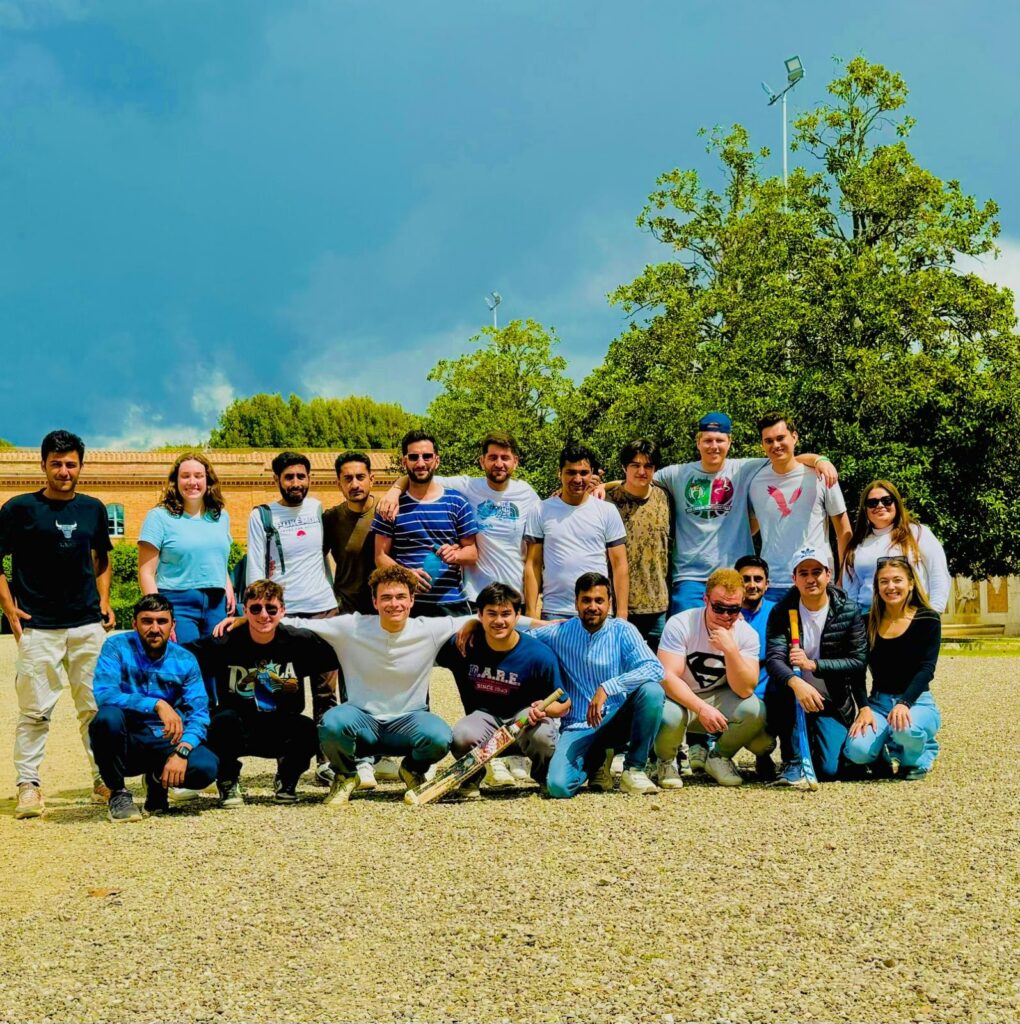
Subjectively, the best part of this has been the incorporation of multiple cultures. It has led to so much bonding and companionship. We have gotten to play sports from Pakistan, the U.S., and Italy, along with singing songs from each culture, and more. This brings out so much love and excitement, more than anything. There is such a strong passion for one's own culture, so to be able to share that with each other, with interest and enthusiasm, is life-changing.
At Siena International Studies, I have had the opportunity to be immersed in service-learning, specifically being involved with Home for the World. This project is about helping those who have escaped their struggles and are trying to restart. Refugees who were plagued by danger and scarce living situations. Ultimately, it’s all about making a new home for a safer and happier life.
University-Community Partnership
Community partners involved
- Nuova Associazione Culturale Ulisse (NACU): SIS institutional partner that aims to assist migrants, refugees and asylum seekers
- Grass and Roots Group: Association of volunteer asylum seekers assisting other asylum seekers and refugees
Co-definition of the social need
The project emerged in response to the war in Ukraine which led to a growing migrant population of Pakistani migrants. Due to COVID-restrictions, traditional service placements were limited. Direct interactions with migrant and asylum seekers identified the needs that the Home for the World project decided to address. While the project continues, the needs are continuously re-defined in ongoing interaction with migrants and local community organizations.
Reciprocity & partner role
Partners have an active role in shaping the activities students do, the needs that are prioritized, and how the project evolves. The partner NACU has a specific role in the project, as it works mitigator between the higher education institution and local stakeholders and community organizations. The partners, and particularly NACU directly contribute to the students learning, offer situated knowledge and expertise, and participate in the assessment and reflection process. The migrants community and community organizations directly benefit from the students work through extra human resources and support.
Within the framework of Home for the World, students collaborate with members of the Grass & Roots group, a volunteer initiative that emerged from the initiative of refugees themselves, particularly from the Pakistani community, that later expanded to include people from other backgrounds. This creates a horizontal learning environment in which students and refugees engage together in language learning, intercultural exchange, and community-based activities, fostering mutual learning, responsibility, and empowerment.
Pedagogical design
Curriculum integration
The course is integrated in the program ‘Interdisciplinary Migration Studies: Service-Learning and Social Action for Integration in Contemporary Italy’. It is a fully integrated service-learning course, the course is mandatory for all students in the program.
Learning objectives
- Students understand migration as a social, political, and historical phenomenon
- Students analyse Italy as a country of migration (past and present)
- Students apply concepts from social sciences to real-world contexts
- Students strengthen their cultural awareness and ethic reasoning
Service & learning activities
Service activities: Within the framework of Home for the World, students work side-by-side with migrants to support Pakistani and Afghani asylum seekers. Students and refugees engage together in language learning, intercultural exchange, and community-based activities, and they assist in providing access to basic services such as legal support and healthcare.
Learning activities: The course offers lectures by teachers and practice experts analyzing the historical, political, economic and social aspects related to Italy as a theater of migration. These lectures are connected to the needs of the target group.
Active role of the student
The course strongly values student voice and agency. The syllabus remains flexible and evolves in response to the service experience and students’ emerging interests.
Reflection
Reflection is a fundamental component of the learning process. Students are required to keep reflective journals throughout the course, where they critically analyze their experiences, confront personal assumptions, and document the development of intercultural dialogue. Reflection is guided through prompts and peer exchange, encouraging a shift from observation to critical awareness and civic responsibility.
Assessment
- Oral presentation
- Final project
- Participation in the service activities
- Reflective journal
Teachers, students and community partners are engaged in the course assessment.
Competences for democratic culture
Competences for democratic culture
Values
- Valuing human dignity and human rights
- Valuing cultural diversity
Attitudes
- Openness to cultural otherness and to other beliefs, world views and practices
- Civic-mindedness
- Responsibility
- Tolerance of ambiguity
Skills
- Empathy
- Flexibility and adaptability
- Autonomous learning skills
Knowledge and critical understanding
- Knowledge and critical understanding of the world
How are competences for democratic culture developed?
Competences for democratic culture are developed through an integrated experiential and reflective learning process. Through direct engagement with real-life situations related to migration and inclusion, and through the interaction with diverse stakeholders (including the refugee volunteers), these competences come to life.
A key tool for developing these competences is the reflective syllabus Reflective Intercultural Education for Democratic Culture and Engaged Citizens, where reflection is positioned as a bridge between experience and democratic learning. Through structured reflective journals, guided prompts, and peer exchange, students are encouraged to move beyond observation and engage in critical self-reflection, questioning assumptions, processing emotional responses, and developing awareness of their role within a democratic and intercultural society. In this sense, competences for democratic culture are not taught as abstract concepts but are experienced, practiced, and reflected upon through the continuous interaction between theory, service, and reflection, supporting the development of responsible and engaged citizens.
Outcomes & impact
Learning outcomes for students
- Intrcultural dialogue
- Development of critical awareness and civic responsibility
Community impact
- Access to basic services such as legal support, healthcare, and mediation of the direct beneficiaries of the student support
- Social inclusion and community integration of migrants in Siena
- Bridging gaps between institutions and vulnerable groups, especially where formal systems fall short. Due to the Home for the World project, NACU became a central organization in the city, engaging other community organizations in Siena.
- As a result of the Home for the World project, the MILAGRO project was developed. This project has led to the creation of the Grass & Roots Group, a volunteer initiative of refugees themselves supporting other refugees and migrants. The target group has thus become more empowered to become active agents in the project and beyond.
Challenges & conditions for success
Challenges
- High workload and organizational complexity for the teaching staff
- Institutional resistance and lack of readiness, as service-learning goes against traditional academic structures
- Accreditation
- High demands for students, due to unpredictability and intensiveness of the course
Conditions for success
- Institutional support of the HEI
- Flexibility in the curriculum